

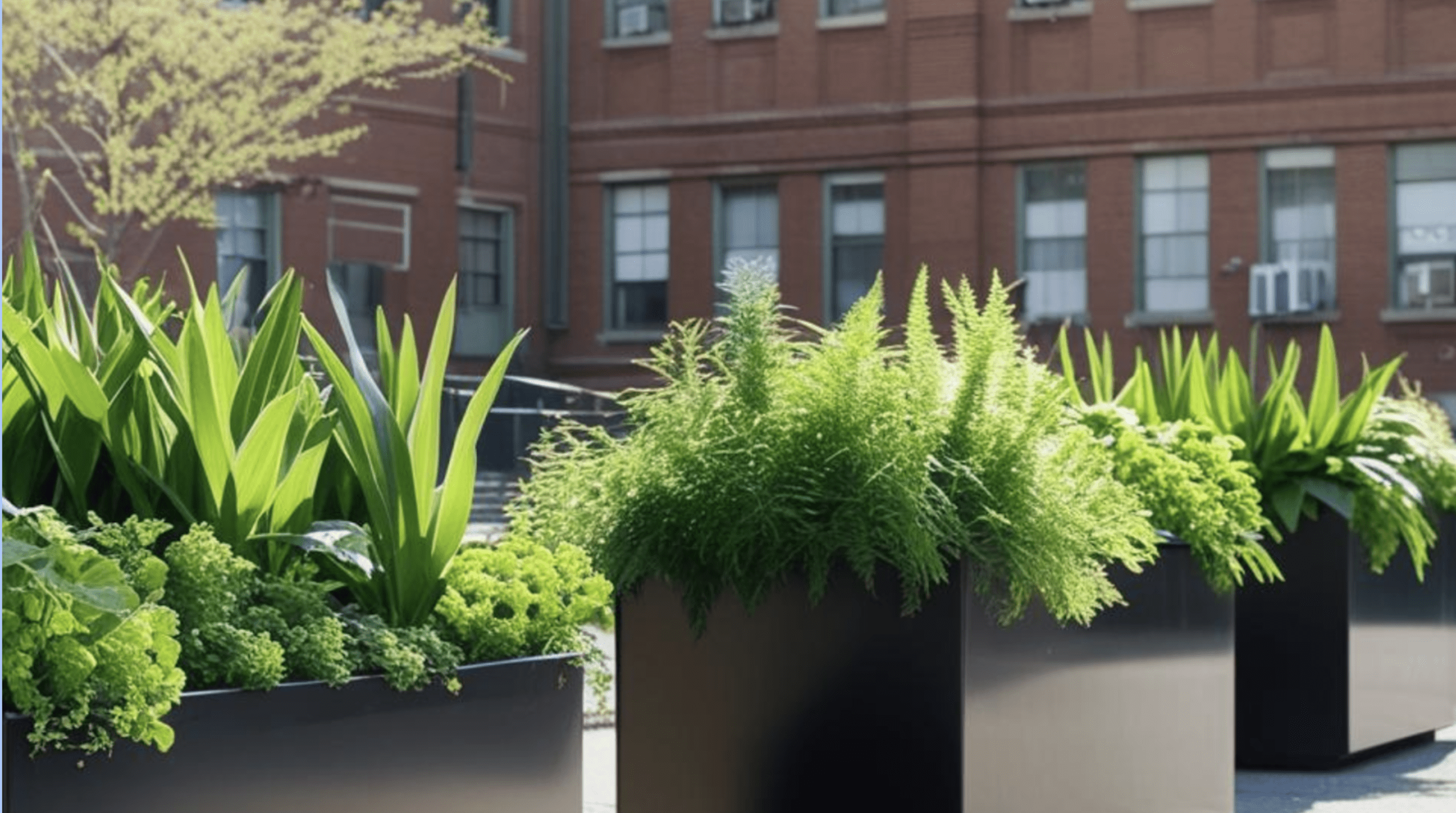
Spring in New York City arrives quickly, and successful installations start with preparation well before the season begins. In December, snow, salt, and winter moisture are already setting the stage for spring conditions, while property teams plan layouts, finalize inventory, and schedule rollouts for the months ahead. Storefronts, building entrances, rooftops, plazas, and terraces all depend on planters that will be ready to perform as soon as winter breaks.
Fiberglass remains one of the most reliable planter materials for NYC spring conditions. With minimal winter preparation, it maintains its structure and finish through temperature swings and moisture exposure, allowing teams to move straight into planting and positioning when spring arrives.
At Planter Resource, we work closely with property teams, designers, and landscapers across all five boroughs to help them prepare for spring while it’s still winter. This FAQ covers the most common questions about fiberglass planter maintenance and readiness we receive as teams plan for the upcoming season.
Get guidance from our team on preparing your spring planters now.
Frequently Asked Questions About Fiberglass Planter Maintenance in Spring
Below are the most common spring-related maintenance questions we hear from NYC properties using fiberglass planters.
Do fiberglass planters need special care during the NYC spring?
Fiberglass planters require very little spring-specific maintenance. The material does not absorb moisture, swell, or degrade as temperatures rise and rain increases. Routine cleaning and visual checks are typically enough to keep planters looking polished throughout the season.
For NYC properties managing multiple spring installs, this low-maintenance performance is one of fiberglass’s most significant advantages.
Does spring rain damage fiberglass planters?
No. Fiberglass is moisture-resistant and does not absorb water, even during prolonged spring rain. Unlike wood or porous stone, it will not warp, soften, or stain from wet conditions.
As long as drainage holes remain clear, rainwater does not impact the planter’s structure or finish.
How should fiberglass planters be cleaned in spring?
Spring cleaning is non-abrasive and straightforward. Most properties use a soft cloth or sponge with warm water to remove winter residue, dust, pollen, and street grime. Mild soap may be used if needed.
Avoid:
- Abrasive pads
- Harsh chemicals
- Pressure washers at close range
Gentle cleaning helps maintain a clean, consistent appearance as foot traffic increases.
Does leftover sidewalk salt affect fiberglass planters in spring?
Fiberglass is highly resistant to salt residue left behind from winter maintenance. While salt may leave a visible film on darker or glossy finishes, it does not penetrate or corrode the material.
Wiping planters during early spring removes residue and restores the finish without requiring special treatments.
Should fiberglass planters be moved or repositioned in spring?
Many NYC properties reposition planters during spring to accommodate new layouts, planting density, or increased pedestrian flow. Fiberglass makes this easy due to its lightweight yet strong properties.
Repositioning does not affect performance, and no special precautions are required when moving fiberglass planters during seasonal updates.
Is it safe to fully replant fiberglass planters in spring?
Yes. Fiberglass planters are ideal for spring replanting. They safely support soil changes, bulb layering, seasonal florals, grasses, and evergreen foundations.
When replanting, ensure drainage holes remain unobstructed to prevent standing water. The planter itself is not affected by moisture, but proper drainage supports plant health.
Do fiberglass finishes fade in spring sunlight?
Fiberglass finishes are UV-resistant and perform well as spring sunlight increases. Matte, gloss, stone-look, and metallic finishes maintain their color consistency throughout the season.
Routine cleaning helps prevent pollen, dust, and grime from dulling the surface, especially in high-traffic retail areas.
How do fiberglass planters perform during spring temperature swings?
Spring in NYC often brings warm days followed by sudden cold nights. Fiberglass flexes slightly rather than cracking, allowing it to handle rapid temperature changes without structural damage.
This flexibility makes fiberglass far more reliable than ceramic or clay under early-spring conditions.
Are fiberglass planters stable in spring wind and storms?
When filled with soil or internal weight, fiberglass planters remain stable during spring wind and storms. Their strength-to-weight ratio provides durability without becoming difficult to manage.
For exposed areas, larger silhouettes or rectangular designs offer additional ground contact and stability.
Are fiberglass planters suitable for high-traffic spring sidewalks?
Yes. Fiberglass is impact-resistant and less likely to chip or crack if bumped by pedestrians, carts, or maintenance equipment. As sidewalks become busier in spring, this durability helps reduce damage and the need for replacements.
Additional internal weighting can be added for extra stability without altering appearance.
Does spring maintenance differ for indoor fiberglass planters?
Indoor fiberglass planters require minimal care during spring. Stable indoor temperatures prevent expansion and contraction, keeping finishes consistent.
Many NYC properties coordinate matching indoor and outdoor fiberglass planters to maintain visual continuity while keeping maintenance simple.
How often should fiberglass planters be inspected in spring?
A quick visual check during routine maintenance is sufficient. Most property teams look for:
- Residue or grime buildup
- Blocked drainage after heavy rain
- Stability after storms
No specialized inspections are required.
Can fiberglass planters carry through summer after spring?
Yes. One of fiberglass’s most substantial advantages is seasonal continuity. After spring, planters can be refreshed with fuller summer plantings without needing to be replaced.
This saves time, reduces costs, and supports consistent design across multiple seasons.
Built for Spring Performance in New York City
Across retail, residential, hospitality, and corporate environments, fiberglass remains the preferred planter material for spring in NYC.
Fiberglass planters offer:
- Moisture resistance during rainy months
- Stability through temperature fluctuations
- Low-maintenance seasonal care
- Lightweight construction for fast repositioning
- A clean, professional appearance throughout spring
At Planter Resource, our fiberglass collections are explicitly selected for NYC conditions, helping teams execute spring transitions efficiently and confidently.
 Simplify Spring Maintenance With Planter Resource
 Simplify Spring Maintenance With Planter Resource
Spring should feel fresh, not complicated. With fiberglass planters built for durability and easy care, NYC properties can focus on presentation rather than maintenance issues.
Explore spring-ready fiberglass planters with Planter Resource.