

Choosing the Right Large Planter
Large outdoor planters can make a strong statement at a home entrance, rooftop, patio, storefront, or commercial property. But choosing a large planter involves more than finding a size you like. You also need to consider the plant, available space, weight, drainage, weather, and how you’ll position the planter.
For NYC homeowners, property managers, designers, and businesses, these FAQs can help you choose large outdoor planters that work for your space.
How Big Should a Large Outdoor Planter Be?
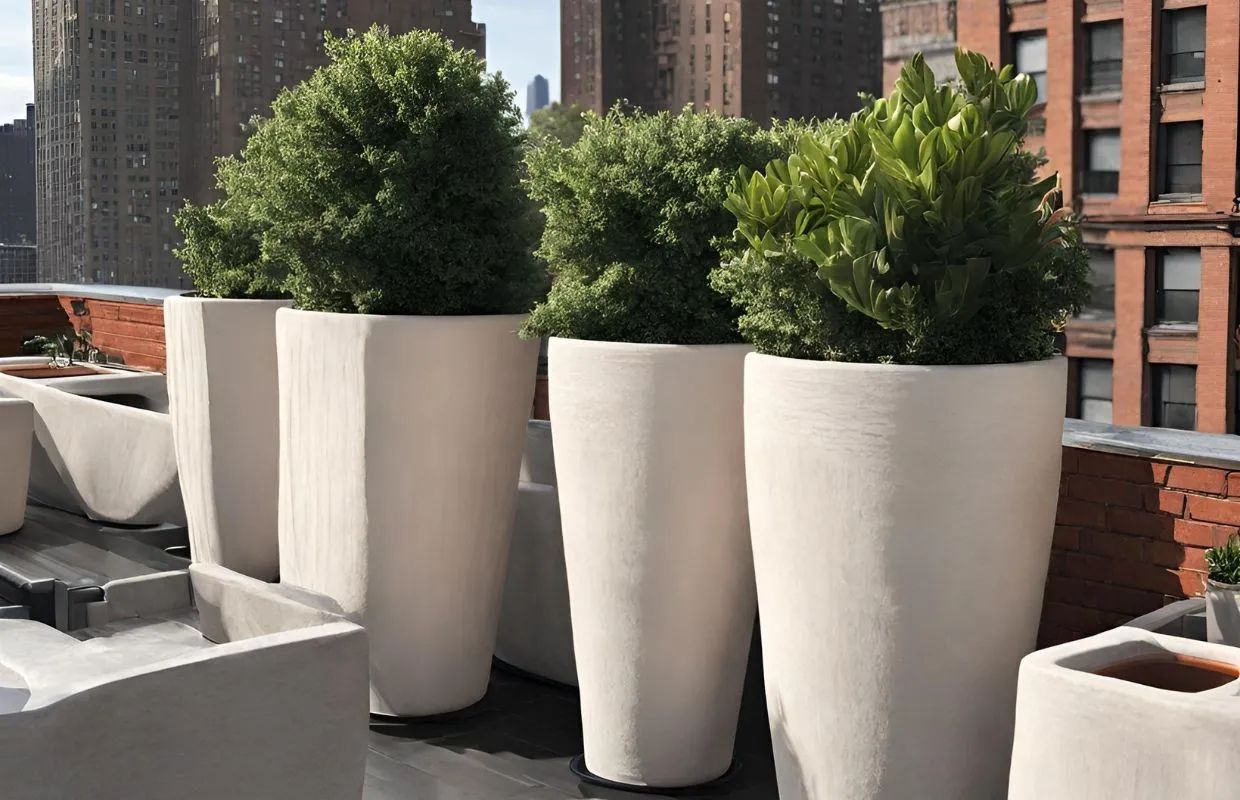
The right size depends on the plant, location, and overall scale of the space. Large planters work well for entrances, patios, rooftops, courtyards, storefronts, and other open outdoor areas where a smaller container may look out of proportion.
Consider the mature size of the plant as well as the space needed for healthy root growth. A planter should provide enough room for the plant without overwhelming the surrounding area.
If you are unsure which size will work, Planter Resource can help you compare available options based on your space and planting plans.
What Size Planter Is Best for a Small Tree?
Small trees generally need a larger container with enough depth and volume to support their root system. The exact planter size depends on the tree species and its expected growth.
Square and round planters can both work well for small trees. Square planters can create a structured appearance around entrances and patios, while round planters can provide a softer focal point.
When choosing a planter for a tree, consider the mature size of the plant rather than selecting a container based only on its current size.
How Much Soil Does a Large Planter Need?
The amount of soil depends on the planter’s dimensions and the plant being grown. Larger containers naturally require more growing medium, but you do not necessarily need to fill every large planter with the same amount of material.
The planting requirements should be considered alongside drainage and the needs of the specific plant. Before ordering a large planter, measure the available space and check its dimensions so you can plan for the appropriate amount of soil.
Are Fiberglass Planters Lightweight?
Yes. Fiberglass is one of the lighter planter materials, making it especially useful for NYC rooftops, balconies, terraces, and other locations where weight and handling matter.
Planter Resource’s fiberglass planters combine lightweight construction with durability and are available in rectangular, round, and square styles.
Their lighter weight can also make installation and repositioning easier compared with heavier planter materials. Browse Planter Resource’s fiberglass planter collections to see available shapes and sizes.
How Do I Prevent a Large Planter From Tipping?
Placement, planter proportions, and the surrounding conditions all matter. Place a large planter on a stable, level surface, especially in exposed outdoor locations.
The plant itself can also affect stability. Tall plants with substantial foliage may catch wind, making placement especially important on rooftops, terraces, and other exposed NYC spaces.
Choose a planter sized appropriately for the plant and location, and consider the conditions around the installation area before positioning it.
Can Large Planters Stay Outside During NYC Winters?
The answer depends on the planter material and the specific product, but Planter Resource offers outdoor planters designed for NYC’s changing weather conditions.
Fiberglass planters are weather-resistant and designed to handle hot summers, cold winters, and coastal wind. Durastone planters are also designed for year-round outdoor placement and resistance to temperature changes, cracking, chipping, and fading.
For a planter that will remain outside through winter, choosing a material suited to NYC weather is an important part of the purchasing decision.
Do Outdoor Planters Need Drainage Holes?
Outdoor planters need a way to drain excess water. Proper drainage helps prevent water from pooling around plant roots, which can create unhealthy growing conditions.
The drainage setup can vary depending on the planter and its intended use. When selecting a large outdoor planter, consider how water will move away from the container and where the excess water will go.
This is especially important on rooftops, patios, balconies, and other spaces where drainage must be considered alongside the surrounding surface.
Can Large Planters Be Used on Rooftops?
Yes, you can use large planters on rooftops, but the location requires extra planning. Consider weight, available space, wind exposure, drainage, and access before installation.
Lightweight fiberglass planters can be particularly useful for rooftop applications because they are easier to handle than heavier materials. Planter Resource offers fiberglass styles in multiple shapes and sizes that can work with rooftop layouts.
For larger rooftop projects, it is helpful to plan the planter locations before ordering so the appropriate sizes and quantities can be selected.
Need help choosing planters for a rooftop? Request a quote from Planter Resource for product options and pricing.
How Difficult Are Large Planters to Move?
Large planters are naturally more difficult to move once they are filled with soil and plants. The planter’s material also makes a difference.
Fiberglass offers an advantage because the container itself is lightweight and easier to handle before it is filled. This helps when planters need to be positioned, rearranged, or installed in locations with limited access.
For property managers and businesses, considering future repositioning can be useful when deciding on planter size and material.
What Are the Best Large Planter Shapes for Outdoor Spaces?
The best shape depends on the layout and design of the space.
Round planters can create focal points at entrances, patios, and open areas.
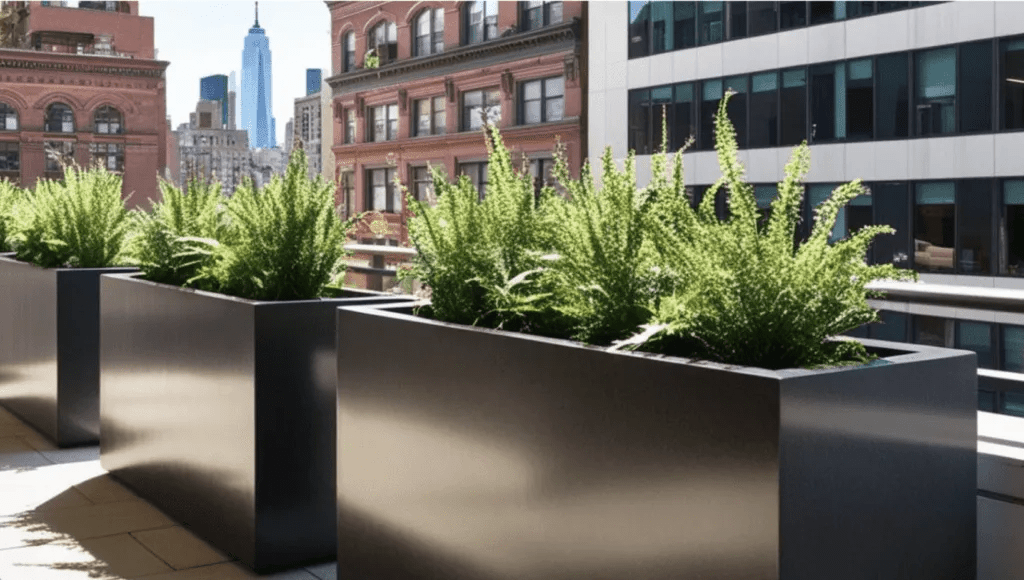
Rectangular planters work well along walls, property edges, walkways, and other linear spaces.
Square planters can create structured arrangements and work particularly well around entrances or with small trees.
Planter Resource offers large outdoor planter options in several shapes, so you can choose a style that fits the available space and the property’s overall appearance.
Can Planter Resource Deliver Large Planters in NYC?
Yes. Planter Resource delivers planters throughout NYC and serves all five boroughs and Long Island. Local delivery options can vary based on the order size and location.
For larger orders, delivery planning is an important part of the process. Planter Resource can help customers coordinate their planter selections and delivery needs.
How Do I Choose the Right Large Outdoor Planter?
Start with the location, then consider the plant, available space, material, weight, drainage, and long-term maintenance needs.
For NYC homes and businesses, the right planter also needs to work with the realities of the space. A rooftop may require a different approach than a storefront, while a large building entrance may call for a substantial focal point.
Planter Resource offers fiberglass, terracotta, cedar, Fiberstone, Durastone, and other planter options for outdoor spaces throughout NYC. Browse the outdoor planter collections or contact Planter Resource for help finding the right option for your project.