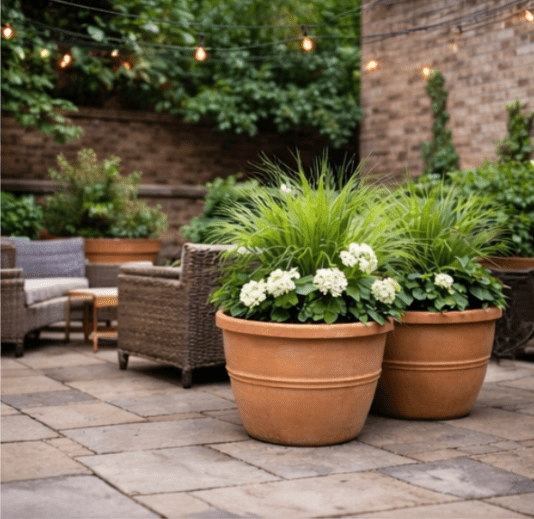
You water them. You choose plants rated for your sun exposure. You use decent potting soil. And still, by midsummer, something has gone wrong, wilting that does not recover after watering, soil that dries out within a day, roots that come out bound and stunted when you finally dig things up in fall. If this pattern sounds familiar, the problem is probably not your plants or your care routine. It is your planter.
The container a plant lives in controls drainage, root temperature, moisture retention, and root space, and getting any one of those wrong in a NYC balcony environment can override everything else you are doing right. Here is what to look for and how to fix it.
Not sure which planter is right for your balcony? Contact Planter Resource for personalized recommendations. We deliver same-day or next-day throughout all five boroughs. Call us today.
The Drainage Problem That Kills More Balcony Plants Than Anything Else
Root rot is the most common cause of balcony plant death in NYC, and it almost always starts with inadequate drainage. Most people know that planters need drainage holes, but having a hole is not the same as having drainage that actually works.
When the Drainage Hole Gets Blocked
In a container that sits directly on a balcony surface, the drainage hole can become partially or fully blocked by the surface beneath it, especially if the planter has settled into a slight depression or the surface is not perfectly level. Water that cannot drain from the pools at the bottom of the container saturates the lower portion of the root zone. The plant looks fine from above, while its roots are slowly suffocating below. Elevating planters on feet or a simple platform, even a half inch of clearance, is one of the most effective things you can do for balcony container health.
When the Potting Mix Is the Problem
Standard potting mixes compact over time, especially in containers that go through repeated wet-dry cycles in an exposed balcony environment. Compacted soil drains poorly, holds too much moisture after rain, and creates air pockets when it does dry out. Refreshing the potting mix at the start of each season or blending in perlite to maintain structure keeps drainage functioning the way it should throughout the growing season.
How Your Planter Material Is Affecting Root Temperature
Dark Materials in Direct Sun Heat Roots Beyond Their Tolerance
A south- or west-facing NYC balcony in July can reach surface temperatures well above the ambient air temperature. A dark-colored planter in direct sun absorbs and transfers that heat to the root zone, and most plants have a root temperature threshold above which function is impaired. The plant cannot take up water or nutrients efficiently, even when both are available, which is why some balcony plants wilt in summer despite regular watering. Choosing lighter-colored finishes for south-facing placements, or positioning darker planters where they receive some afternoon shade, makes a real difference.
Terracotta Dries Out Faster Than You Think in NYC Summer Heat
Terracotta’s porosity, the same characteristic that makes it excellent for succulents and herbs, means water evaporates through the walls as well as from the soil surface. In a hot, dry summer on a NYC balcony, a medium terracotta pot can dry out completely within a day. If your schedule does not support daily watering in peak summer, terracotta is working against you. Fiberglass planters retain moisture significantly longer because they are non-porous; the only moisture loss is through drainage and the soil surface. For balcony gardeners who cannot water every day, this difference is meaningful. See our full range of outdoor planters for material options.
The Sizing Problem That Stunts Growth All Season
Undersized Planters Restrict Roots, and Stressed Roots Mean Struggling Plants
One of the most common balcony gardening mistakes is choosing planters that look proportionate to the plant at purchase, but do not leave room for the root system to develop. A plant in a container that is too small becomes root-bound; the roots circle the interior of the pot, unable to expand, which limits the plant’s ability to take up water and nutrients. The plant survives but never thrives, and by late summer, it is visibly stressed. As a general rule, the planter should be at least 2 inches wider than the plant’s current root ball, and for plants that will grow significantly throughout the season, sizing up further is always the better choice.
Large Planters Are Not Always the Right Answer Either
Oversizing creates the opposite problem. A small plant in a large planter is surrounded by a volume of soil that cannot dry out between waterings, keeping the root zone perpetually moist and creating conditions for fungal issues. The right size leaves room for growth without overwhelming the plant’s root system. Matching the planter to the plant’s mature size rather than its current size is the most practical approach for a single-season setup.
Wind: The Balcony Factor Most NYC Gardeners Underestimate
Wind Accelerates Moisture Loss Dramatically
Upper-floor NYC balconies are windier than street level, often significantly so. Wind accelerates evaporation from both the soil surface and plant foliage, meaning balcony plants in exposed positions dry out faster than the same plants would at ground level. If you are watering on a schedule that worked last year on a lower floor or in a different location, it may not be adequate for a more exposed balcony. Checking soil moisture rather than watering on a fixed schedule is more reliable in variable wind conditions.
Heavier Planters Stay Put Lighter Ones Need Anchoring
On exposed balconies, lightweight planters can tip or shift in strong winds. Durastone planters and larger fiberglass planters filled with soil are generally stable, but smaller lightweight containers may need to be grouped together, placed against a wall, or weighted at the base. Never place planters directly on balcony railings or ledges regardless of weight.
Ready to set up a balcony that actually works? Planter Resource has been helping NYC homeowners find the right planters for their specific spaces since 1994. Get in touch or visit our warehouse for same-day or next-day delivery throughout all five boroughs.
Frequently Asked Questions

Why do my balcony plants wilt even when I water them regularly?
The most common causes are root rot from poor drainage, root heat stress from a dark planter in direct sun, or root-bound plants in undersized containers. If the soil is consistently wet but the plant is wilting, drainage is the likely culprit. If the soil dries out quickly and the plant wilts in afternoon heat, heat stress or moisture loss from wind is more likely.
How do I know if my planter has adequate drainage?
After watering, check that water flows freely out of the drainage hole and does not pool at the base. If water drains very slowly or the bottom of the planter stays wet for more than a day or two, the drainage hole may be blocked, the potting mix may be compacted, or the planter may be sitting on a surface that blocks drainage. Elevating the planter slightly on feet resolves most drainage blockage issues.
What is the best planter material for an NYC balcony?
For most NYC balcony conditions, fiberglass is the most practical choice. It retains moisture longer than terracotta, does not absorb heat the way dark clay or concrete does, is lightweight enough to manage on upper floors, and handles all four seasons without damage. For plants that specifically benefit from terracotta’s porosity, such as succulents, herbs, and lavender, terracotta works well in shadier or more sheltered balcony positions where drying out fast is less of a problem.
How big should my balcony planters be?
Size the planter to the plant’s mature root system, not its current size at purchase. For most perennials, shrubs, and ornamental grasses, a planter at least 14 to 18 inches in diameter is a reasonable minimum for a single-season setup. For annuals and herbs, smaller planters are fine. When in doubt, go larger. The consequences of undersizing are worse than oversizing for most plants.
How often should I water balcony planters in summer?
In an NYC summer, upper-floor balcony planters in full sun may need watering every 1 to 2 days during peak heat. The only reliable guide is checking soil moisture, push a finger an inch into the soil, and water when it feels dry at that depth. Wind, sun exposure, planter material, and plant type all affect how quickly containers dry out, so a fixed schedule is less reliable than checking regularly.
Can I use the same planters year after year on my balcony?
Fiberglass planters are designed for multi-year outdoor use and will last many seasons with minimal maintenance. At the start of each season, empty and clean the planter, refresh the potting mix, and check that drainage holes are clear. Terracotta must be brought inside before the first hard frost each year to prevent cracking. See our weatherproof garden planters, designed for year-round outdoor use in NYC.
The Right Planter Makes NYC Balcony Gardening Easier, Not Harder
Most balcony plant failures come down to the container, not the gardener. The right material, size, and drainage setup makes the difference between plants that struggle through the season and plants that establish, grow, and look good with straightforward care. Planter Resource carries the full range of options for NYC balcony conditions, and our team can help you match the right planter to your specific space, sun exposure, and watering schedule.
Browse our fiberglass planters, terracotta planters, and full outdoor range online, or visit our warehouse to see everything in person. Contact us or call today· Same or next-day delivery throughout NYC