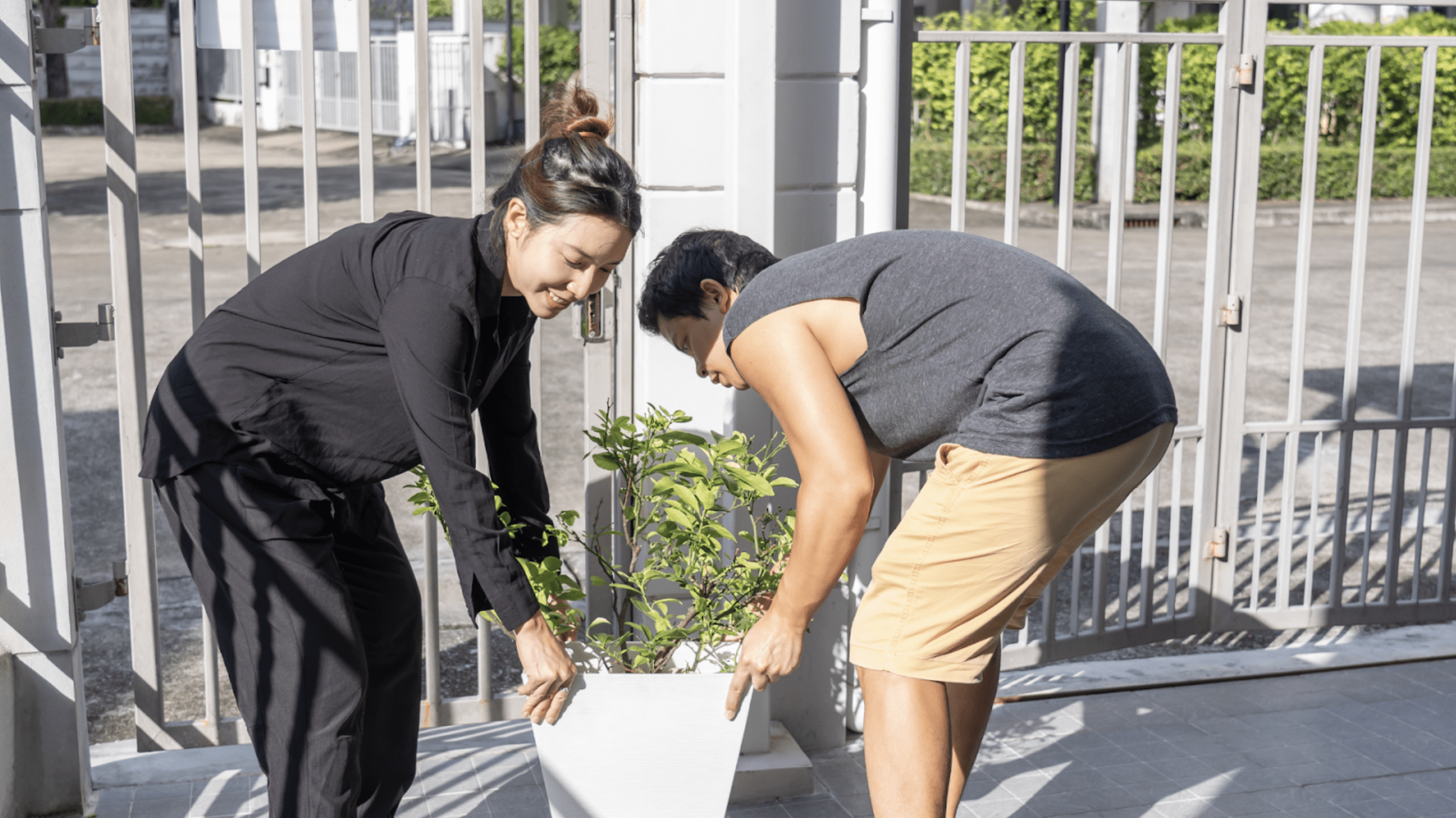
In New York City, residential landscapes are designed under constant pressure. Limited space, heavy use, strict weight limits, and year-round exposure demand materials that can perform without constant intervention. When planters crack, stain, or require seasonal replacement, the landscape suffers. Fiberglass has become a go-to material in NYC residential landscaping because it supports long-term design while adapting to real urban conditions.
At Planter Resource, we support NYC residential landscape projects with locally stocked fiberglass planters, consistent sizing and finishes, and same-day or next-day delivery across all five boroughs. Our approach helps landscape architects, property managers, and residential developers plan once and build landscapes that stand the test of time.
Explore fiberglass planters built for NYC residential landscapes.
Courtyards that Stay Consistent through the Seasons
Residential courtyards see constant activity. Foot traffic, maintenance crews, furniture shifts, and weather exposure all take their toll. Fiberglass planters are frequently specified in these spaces because they resist chipping, don’t absorb moisture, and maintain a clean appearance with minimal upkeep.
Designers often use larger fiberglass planters to define seating areas, create pathways, and introduce greenery without overwhelming circulation. The same planters remain in place year-round, while plantings evolve seasonally.
Rooftop Landscapes Built Around Weight and Wind
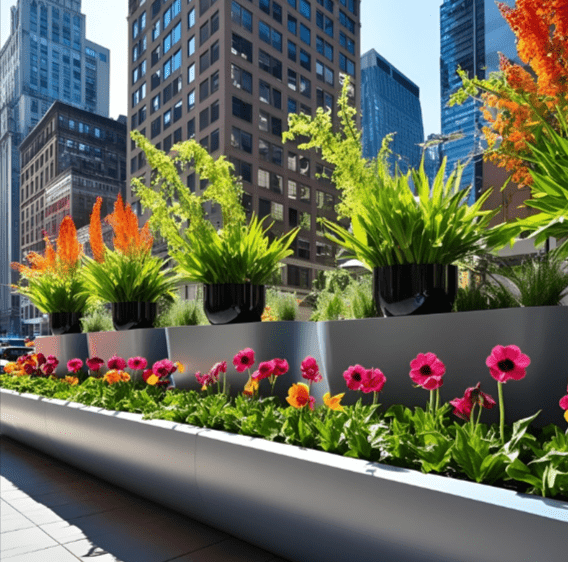
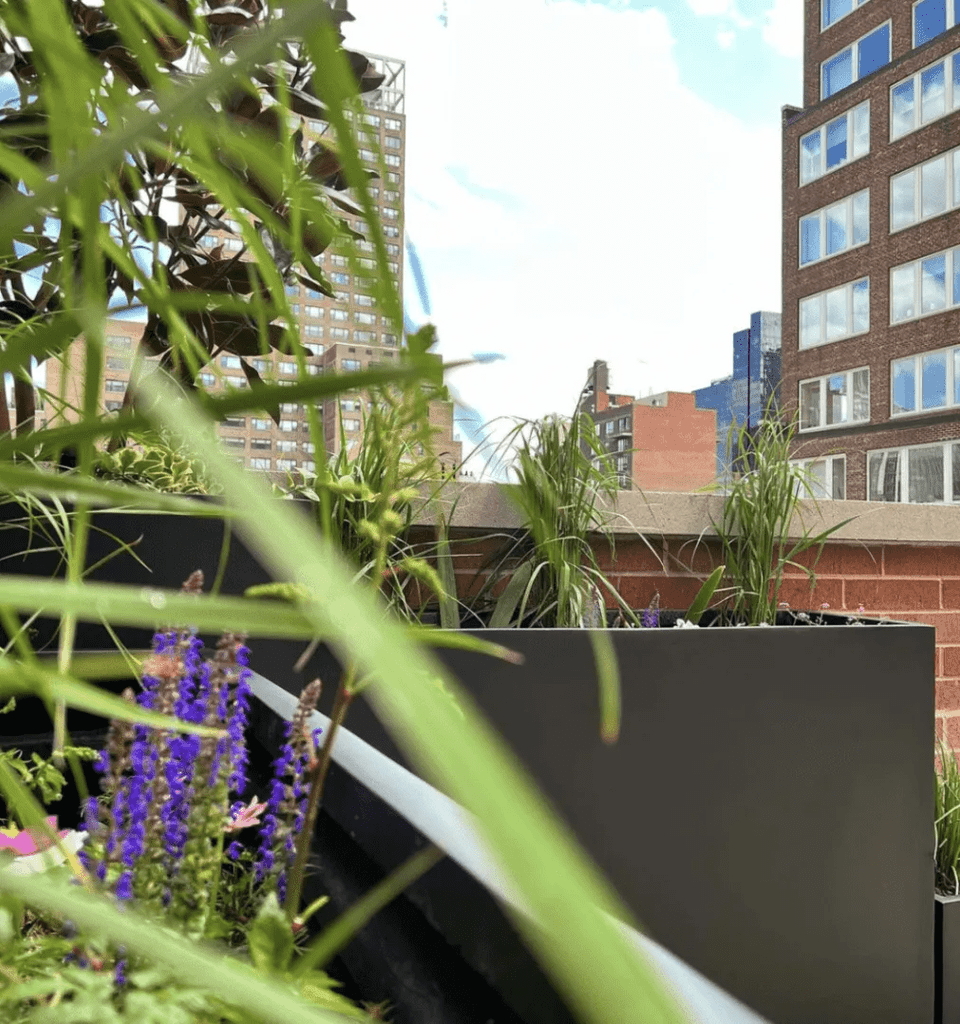
Rooftop landscapes in residential buildings require careful material selection. Weight restrictions, wind exposure, and drainage considerations limit what can be installed safely. Fiberglass meets these constraints while still allowing for large-scale planting.
Planters can be internally weighted to improve stability without increasing exterior bulk. This allows rooftop landscapes to incorporate trees, shrubs, and layered greenery while maintaining safety and flexibility.
Entry Landscapes Set the Property Tone
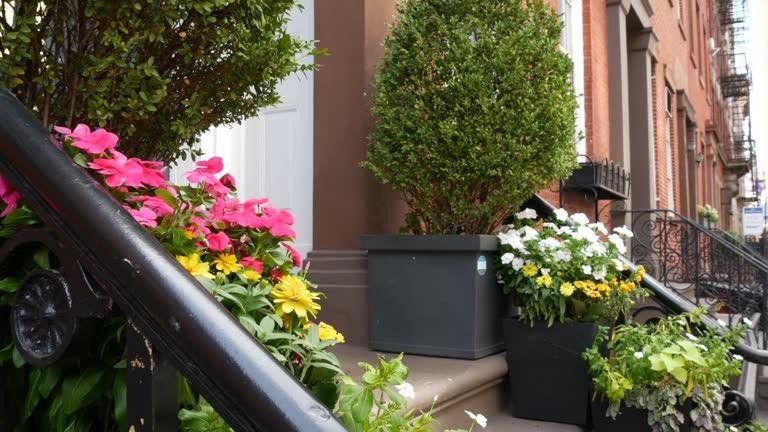
Residential landscapes often begin at the entry. From townhouse fronts to apartment building approaches, planters frame doors, soften architecture, and guide movement. Fiberglass planters work well in these zones because they provide structure without narrowing walkways or creating maintenance challenges.
Rectangular and tapered fiberglass planters are commonly used to create rhythm and balance along entry paths while standing up to frequent contact and cleaning.
Shared Outdoor Spaces With Long-Term Use in Mind
Residential properties rely on shared outdoor spaces to add value for tenants and owners. Fiberglass planters support these areas by offering durability and consistency across multiple locations.
In communal gardens and amenity spaces, the same planter styles are often repeated to create visual cohesion. Fiberglass allows this standardization without compromising performance or design flexibility.
Seasonal Change Without Structural Replacement
Residential landscapes change with the seasons, but planters should not. Fiberglass supports this approach by remaining stable through temperature shifts, rain, and sun exposure.
Landscaping teams can refresh plantings without removing or replacing containers. This reduces labor, lowers replacement costs, and keeps the landscape visually consistent throughout the year.
 Design Flexibility Across Property Types
 Design Flexibility Across Property Types
NYC residential landscapes vary widely from small townhouses to large apartment complexes and mixed-use developments. Fiberglass planters adapt to this range easily.
They work equally well in:
- Intimate garden courtyards
- Large-scale residential developments
- Rooftop amenity spaces
- Transitional zones between buildings
Their clean lines and adaptable finishes allow designers to tailor the planting style while maintaining a consistent material palette.
Lower Maintenance for Property Teams
Residential landscape maintenance must balance appearance with efficiency. Fiberglass planters reduce the need for frequent repairs, replacements, and seasonal storage.
They clean easily, resist staining, and handle routine handling without surface damage. For property managers and landscape teams, this reliability simplifies long-term maintenance planning.
Supporting Healthy Plant Growth in Urban Settings
Fiberglass planters allow for proper soil depth, drainage, and root development, key factors in residential landscape success. They support both shallow- and deep-rooted plantings, depending on design needs.
This flexibility allows landscapers to incorporate a wide range of plant material, from groundcover and grasses to shrubs and small trees, without changing container material.
A Material that Grows With the Landscape
Residential landscapes evolve as buildings mature and usage patterns change. Fiberglass planters accommodate this evolution by remaining adaptable and reusable.
A planter installed in a courtyard today may later anchor a rooftop or frame a new entry path. This reusability extends the value of the initial investment.
The Practical Choice Behind NYC Residential Landscapes
Fiberglass rarely draws attention to itself, and that is its strength. It allows the landscape to take center stage while quietly meeting the demands of urban living.
Across courtyards, rooftops, entries, and shared spaces, fiberglass planters continue to support residential landscapes in NYC that prioritize longevity, flexibility, and thoughtful design.
For residential properties looking to build green spaces that last, fiberglass remains a dependable foundation.
Talk with our team to plan fiberglass planters for your residential landscape project.